


How to recognize greenwashing?
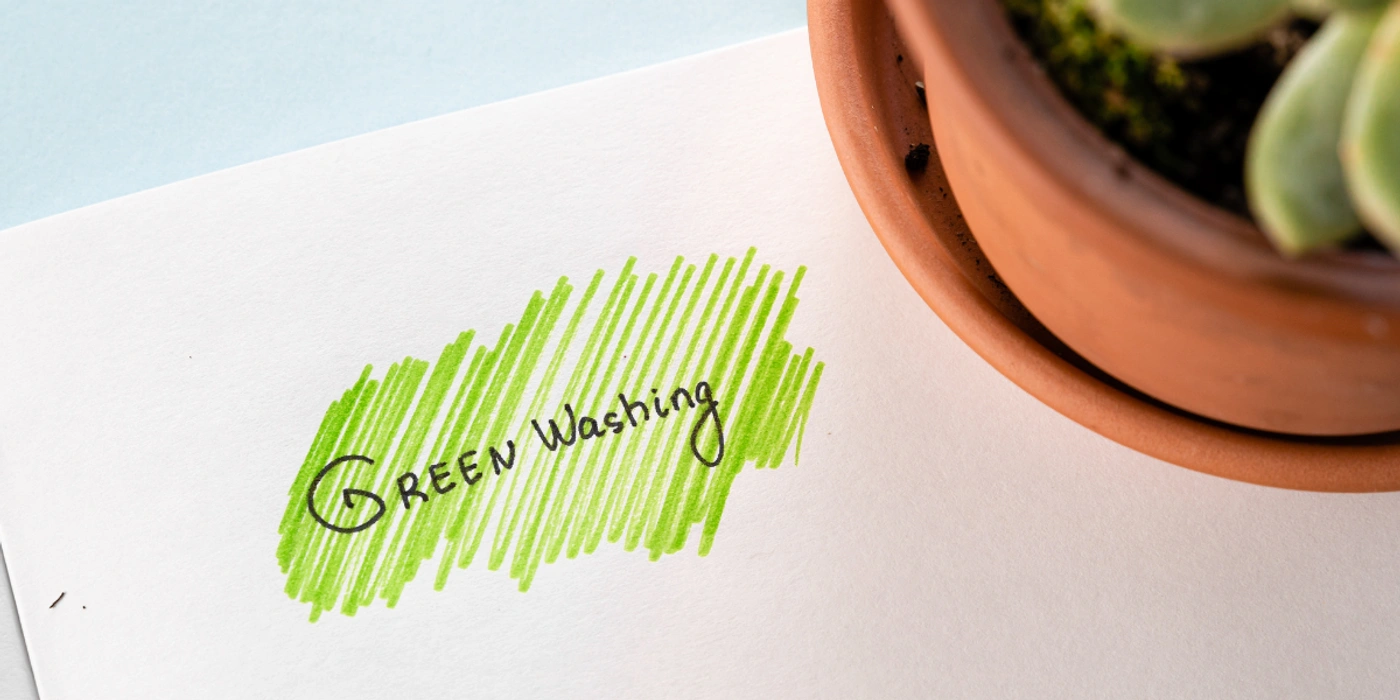
In recent years, there has been a general awareness among consumers about sustainability issues. Companies have understood that this is a selling point. Unfortunately, some of them are taking advantage of the situation by touting social and environmental commitments that are really just a façade. They are doing what is called greenwashing.
What is greenwashing?
Greenwashing is a marketing technique used by an organization to give itself an eco-responsible image. It is a form of false and misleading advertising that allows companies to green their image and make us believe that they are in a sustainable development approach. But in reality, they are only in words!
This type of practice has many negative consequences. On the one hand, greenwashing confuses consumers, who are becoming more and more distrustful of brands. On the other hand, they damage the image of companies that are truly committed to a CSR and sustainable development approach.
Greenwashing is punished, but many companies still use it. This is why it is important to learn to identify it in order to know the difference between real impact companies and those only concerned with their image. In this article, Meet My Job gives you 6 things to help you recognize a brand that is greenwashing.
Why join an eco-responsible company?
How to identify greenwashing?
Exaggerated and overly " green " packaging
Greenwashing can be based on codes and images that are ingrained in the minds of consumers, and that create confusion when used. The green, the leaves, the nature, the "natural origin" labels ... So many symbols that lead us to think that the composition of the product is clean while it is not for many brands. It is therefore necessary to be well informed about the brands to favor and not to be influenced by a simple design!
Applications such as Yuka, Buyornot or Kwalito , for example, make it possible to analyse the composition of many products in the food or cosmetics industry. It's a good way to avoid certain ingredients that are bad for the environment and health!
See also: 6 Free Apps to Eat Better and Healthy
Acts that contradict the discourse
Some of the actions put in place are inconsistent with the brand's message. Let's take the example of ready-to-wear: a brand can very well promote its clothes made of organic cotton, and use minors as a workforce on the other side of the world...
In the cosmetics sector, the brand can claim not to use any animal substances in the manufacture of its products, and to continue to test its products on animals. The lie is obvious, but it is advisable to keep a critical mind so as not to fall into the trap !
The absence of evidence
On some products, there are many statements such as "made from natural ingredients", "100% pure juice", "100% organic cotton", etc. But where can we find this information? What is the percentage of natural ingredients? Where is the asterisk that mentions the study affirming this message ? Very often, some statements are not regulated by organizations, which allows companies to use them as they wish ! Hence the interest in combing through the company's various communication actions in order to discern the true from the false.
Irrelevant messages
Be careful not to fall into the trap! Some brands use eco-friendly attributes to describe their products when they have no relevance. For example, displaying in large letters "palm oil-free" on the packaging when the product, by its very nature, does not contain it.
Non-recognised labels
Some labels related to ecology and sustainable development may lead us to believe that there is a real label, reliable and meeting specific standards. However, sometimes these are invented labels that the brand has attributed to itself without having been subjected to any control. When dealing with a label, it's best to check if it really exists!
False exclusivity
According to ADEME, the French Environment and Energy Management Agency, the practice of "false exclusivity" consists of the company boasting of an ecological interest or an innovation when it is only complying with legal obligations. All the competitors then have the same attributes (there is clearly nothing to brag about!)
As consumers, it is quite possible to act at our level by remaining attentive to the communication actions of brands. Go beyond just reading the label and question the points you are skeptical about. To begin with, these 6 elements can help you recognize whether a brand is greenwashing or not!
For more content, feel free to visit our Linkedin and Instagram !
Discover our positive impact companies
Meet My Job is the 1st Belgian recruitment platform dedicated to sustainable development. So, what are you waiting for? Find your dream job/internship in sustainability here !